• About Us
    • Our Purpose
    • Our Strategy
    • What we do
    • Our Impact
    • Our team
    • Work For Us
    • Volunteer
    • The DMD Registry
    • Action Duchenne Policies
  • Get Support
    • Support Calendar – What’s On
    • In-Person Support Events
    • Register for Support
      • Time Out – A Space for Mums
      • Dads Against Duchenne
      • Grandparents Together
      • Open Space
      • Group Counselling Programme
    • Recently diagnosed
    • Schools
    • Siblings
    • End of Life and Bereavement
  • AD Annual International Conference
    • Highlights from the Action Duchenne Conference 2025
    • Action Duchenne Annual International Conference 2025
  • News, Webinars and Blogs
    • News
    • Webinar Series 2026
    • Webinar recordings
    • Bite-Sized Duchenne Science Live
      • Facts about Duchenne muscular dystrophy
      • Signs and Symptoms of Duchenne Muscular Dystrophy
      • Diagnosis of Duchenne Muscular Dystrophy
      • Crucial Genetic Terminology
      • Genetics – Blueprint of Duchenne Muscular Dystrophy
      • How is Duchenne Muscular Dystrophy Inherited?
    • Hear From Our Community
  • Support Us
  •  0 items - £0.00
  • Menu
  • Skip to right header navigation
  • Skip to main content
  • Skip to secondary navigation
  • Skip to primary sidebar
  • Skip to footer

Before Header

  • My account
  •  0 items - £0.00

Action Duchenne

Header Right

  • About Us
    • Our Purpose
    • Our Strategy
    • What we do
    • Our Impact
    • Our team
    • Work For Us
    • Volunteer
    • The DMD Registry
    • Action Duchenne Policies
  • Get Support
    • Support Calendar – What’s On
    • In-Person Support Events
    • Register for Support
      • Time Out – A Space for Mums
      • Dads Against Duchenne
      • Grandparents Together
      • Open Space
      • Group Counselling Programme
    • Recently diagnosed
    • Schools
    • Siblings
    • End of Life and Bereavement
  • AD Annual International Conference
    • Highlights from the Action Duchenne Conference 2025
    • Action Duchenne Annual International Conference 2025
  • News, Webinars and Blogs
    • News
    • Webinar Series 2026
    • Webinar recordings
    • Bite-Sized Duchenne Science Live
      • Facts about Duchenne muscular dystrophy
      • Signs and Symptoms of Duchenne Muscular Dystrophy
      • Diagnosis of Duchenne Muscular Dystrophy
      • Crucial Genetic Terminology
      • Genetics – Blueprint of Duchenne Muscular Dystrophy
      • How is Duchenne Muscular Dystrophy Inherited?
    • Hear From Our Community
  • Support Us

Translarna accepted by Scottish Medicines Consortium

You are here: Home / News / Translarna accepted by Scottish Medicines Consortium
Translarna accepted by Scottish Medicines Consortium

April 12, 2021 by Lynnette

  • A drug called Translarna can help treat an underlying condition of Duchenne muscular dystrophy
  • Action Duchenne, Duchenne Family Support Group, Muscular Dystrophy UK and Duchenne UK appeared before the Scottish Medicines Consortium in March
  • The Scottish Medicines Consortium has accepted the drug for use on NHSScotland over the next three years
  • The drug company must now submit a plan to Scottish Government before it can be given on NHSScotland

A drug that can treat an underlying genetic cause of a muscle-wasting condition has been accepted for use on NHSScotland, it was announced today (12 April).

This will pave the way for the drug to be made available across the next three years, through a system called the ‘ultra-orphan pathway’.

Today’s exciting news comes after Muscular Dystrophy UK, Action Duchenne, Duchenne Family Support Group and Duchenne UK appeared before the Scottish Medicines Consortium (SMC) last month, following an earlier joint submission to accept Translarna for use on NHSScotland.

The drug can help treat patients with an underlying genetic cause of Duchenne muscular dystrophy (DMD), called nonsense mutations. This condition primarily affects boys and causes muscles to weaken and waste over time, with most of those affected needing to use a wheelchair by the age of 12. The life-limiting disease also causes other severe health problems to the heart and breathing muscles.

In today’s announcement, the SMC said it accepts that Translarna meets the definition of what is known an ultra-orphan medicine, used to treat extremely rare conditions. It means that eligible DMD patients aged two or over and who are able to walk should be able to have the treatment on NHSScotland under the ultra-orphan pathway for at least the next three years. This is provided that the company manufacturing Translarna submits a data collection plan to the Scottish Government.

The plan should outline how further data, including evidence outlining the experiences of patients and carers, will be collected over the next three years. At the end of this period, the drug company should provide the SMC with an updated submission for reassessment. The SMC will then review the evidence before deciding if Translarna can be routinely used on NHSScotland.

In today’s announcement, the SMC acknowledged that Translarna “may allow affected children to retain the ability to walk for longer, potentially leading to increased independence”. More information can be read here.

Provided that the drug company has submitted its plans to the Scottish Government, Translarna will be given in addition to the current standard treatments on NHSScotland. Families and individuals should speak with their clinician to find out more about eligibility. More information will be shared with relevant patient groups accordingly.

A spokesperson on behalf of the four charities said:

Muscular Dystrophy UK, Action Duchenne, Duchenne Family Support Group and Duchenne UK are delighted the SMC has accepted Translarna for use on the ultra-orphan pathway for the next three years. Today’s announcement is excellent progress in our bid to help those with Duchenne muscular dystrophy access appropriate treatment in Scotland, especially because every day is a race against time to slow down the condition.

We believe that the physical and mental health benefits of Translarna have the potential to improve lives for so many families living with Duchenne. The four charities are therefore very much looking forward to hearing the drug company’s plans going forwards, so that patients can start to access treatment as quickly as possible.

Further reading

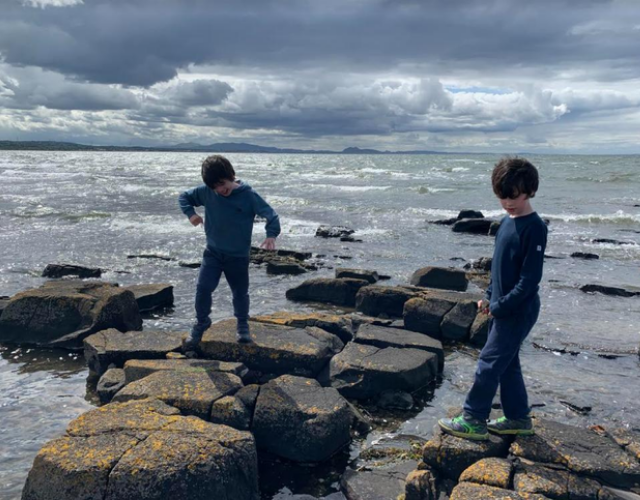
Cormac Fegan (10) son of Gary our Chair of the Board, was the first child in the UK to get the drug Translarna on the NHS shortly after he turned five.

Following the news that the drug has been accepted for use on NHSScotland through the ‘ultra-orphan pathway’ the Edinburgh Evening News has published a story where Gary talks about how Translarna has led to a huge improvement in Cormac’s behaviour and mobility.

Read article
The boys playing together at the beach.
Cormac and his brother
Share this:

Category: News, TranslarnaTag: Translarna

Previous Post: « Public statement from NICE
Next Post: Diagnosis, support and fundraising »

Primary Sidebar

From our community

Blue Monday Blog: Hear from Victoria, our Fundraising Officer and Duchenne Mum

Written by Victoria Edwards, Action Duchenne’s Fundraising Officer and mum to Dougie (who lives with Duchenne) and Allie. Feeling Blue “This Monday was Blue Monday, and wow… I really felt it. It was grey, drizzly, my son was up half the night and ended up off school from sheer tiredness. My daughter went in to …

“Making contact with Action Duchenne provided a lifeline”

“Making contact with Action Duchenne provided a lifeline”: Find out why Ben Dolling decided to run the London Marathon dressed as a parrot! Harry was diagnosed with Duchenne muscular dystrophy in 2019 Ben and his wife have 3 children: a daughter in year 3 and a son in his first year of university and Harry, …

The Power of Shared Experience: “Honestly, it would’ve been a much harder road without having joined this group.”   

Action Duchenne have monthly online meet-ups for Duchenne dads, mums and grandparents, facilitated by our Family Support Officers and designed to enable connection with those who truly understand. A Duchenne diagnosis can often set people apart from the support systems they usually rely on. Our support groups mean you can meet people who know exactly …

Footer

Action Duchenne
5th Floor, Mariner House
62 Prince Street
Bristol
BS1 4QD

07535 498 506
info@actionduchenne.org 


Subscribe to our mailing list

Do you consent to receiving regular email updates? *
Email Format
  • Accessibility
  • Privacy Policy
  • Terms & Conditions

© Action Duchenne - Registered Charity No 1101971 - Scottish Charity No SC043852

Like most websites we use cookies to deliver a personalised service. To use the website as intended please accept cookies.
Privacy & Cookies Policy

Privacy Overview

This website uses cookies to improve your experience while you navigate through the website. Out of these, the cookies that are categorized as necessary are stored on your browser as they are essential for the working of basic functionalities of the website. We also use third-party cookies that help us analyze and understand how you use this website. These cookies will be stored in your browser only with your consent. You also have the option to opt-out of these cookies. But opting out of some of these cookies may affect your browsing experience.
Necessary
Always Enabled
Necessary cookies are absolutely essential for the website to function properly. This category only includes cookies that ensures basic functionalities and security features of the website. These cookies do not store any personal information.
Non-necessary
Any cookies that may not be particularly necessary for the website to function and is used specifically to collect user personal data via analytics, ads, other embedded contents are termed as non-necessary cookies. It is mandatory to procure user consent prior to running these cookies on your website.
SAVE & ACCEPT